
In theory, every ad click is a neat little transaction: user sees the thing, platform nods in approval, advertiser pays, analytics logs the event, everyone goes home happy. But then, ad cloaking strolls in and quietly shreds that whole arrangement—without even bothering to break the click itself.
This is why cloaking is so slippery. It rarely shows up as some obvious hacked creative or a bot farm chewing through impressions. Most of the time, it just looks like… adtech doing adtech things: campaign click, tracking redirect, landing page, conversion pixel. The trick is all in the routing logic. One visitor lands on a squeaky-clean page. Someone else gets the real money-maker. The reviewer sees just enough innocence to rubber-stamp the campaign. The actual user? They get the offer, the scam, the malware, or the prohibited funnel that was never meant for reviewer eyes.
If you work in adtech, cloaking is interesting because it abuses the ecosystem’s own strengths. Cloaking doesn’t brute-force its way in; it just borrows all the clever tools we built—personalization, localization, testing, redirecting, segmenting, optimizing, the whole buffet—and repurposes them into a policy-evasion layer.
Cloaking, Plainly Defined
Google Search calls it ‘cloaking’—basically, the practice of showing one thing to users and something else to search engines, all in the name of gaming the rankings or just misleading people for profit. Google Ads, not to be outdone, has its own ‘circumventing systems’ policy, which is the same thing with a slightly more bureaucratic name: if you’re showing different stuff to different people (or to Google itself) to sneak past the rules, congrats, you’re officially Not Allowed.
Google Ad Manager has its own flavor of this: the publisher-side remix. Here, a sketchy ad shows up at the ad server looking all innocent and well-behaved, but then—surprise!—when it’s actually delivered, it morphs into something sensational, misleading, or just straight-up scammy.
In underground affiliate and scam-ad slang, the split is often described as:
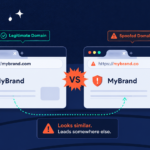
- Safe page: the compliant page shown to platform reviewers, crawlers, brand-safety scanners, or suspicious traffic.
- Money page: the actual funnel shown to the targeted user.
- Traffic distribution system: the routing layer that decides which version a visitor receives.
Those terms make the thing sound almost quaint. Technically, it is closer to a conditional content delivery system where the condition is not user experience, compliance, or relevance, but reviewer avoidance.
The distinction matters. Different content is not automatically cloaked. A retailer can show prices in local currency. A publisher can use responsive design. A campaign can run A/B tests. A regulated advertiser can show state-specific disclosures. Google Ads explicitly states that variations in language, geography, special offers, or slow-connection experiences can be acceptable when the promoted product or service remains the same for everyone.
Cloaking begins when the variance changes the destination’s truth: a different offer, a different risk, a different business, a different claim, a different funnel.
Google’s own examples are useful because they keep the definition practical. Showing Google a clothing store while sending users to a gun-sales page is cloaking. Blocking Google’s access to most of a destination with an intrusive pop-up can be cloaking-adjacent because the reviewer cannot evaluate the page.
Using click trackers to direct users to prohibited content is still a violation, even if the tracker itself is a legitimate measurement tool. The line is not “did a redirect happen?” The line is “Was the redirect or page variation used to hide a policy problem?”
Why Ad Cloaking Feels Native to Adtech
The uncomfortable part is that cloaking does not require alien technology. It borrows from ordinary adtech.
A legitimate campaign might use a click tracker to measure source, creative, device, keyword, geography, audience, and conversion path. It may route users to localized pages, run experiments, pass parameters into analytics, suppress fraud, or apply consent logic. Every serious performance marketer has some version of that machinery.
A cloaking setup uses similar inputs for a different job: deciding whether the visitor is allowed to see the real destination.
At a high level, the router may evaluate signals like:
- Request context: user agent, headers, referrer, click identifiers, query parameters.
- Network context: IP reputation, ASN, hosting provider, corporate networks, VPN or proxy patterns.
- Device context: browser family, screen size, timezone, language, rendering capabilities.
- Behavioral context: whether the session looks like a real post-click user or a crawler-like visit.
- Campaign context: which ad account, creative, placement, country, or time window produced the click.
In a clean system, routing improves relevance or compliance. In a cloaked system, routing hides non-compliance from the party responsible for reviewing it.
This is why cloaking is hard to reason about from a policy deck alone. The same primitives can produce a harmless localized landing page, a legitimate age-gated flow, or a scam funnel that only appears after review. Adtech loves conditional logic. Cloaking weaponizes conditional logic.
The Basic Attack Pattern
Most ad cloaking follows a familiar shape:
- Submit an ad that appears to point to an acceptable landing page.
- Put a routing layer between the click and the final experience.
- Identify traffic that resembles a platform reviewer, crawler, scanner, investigator, or otherwise risky observer.
- Serve that observer the safe page.
- Serve selected real users the money page.
- Rotate domains, accounts, creatives, redirects, and page variants as enforcement catches up.
The strategy is not new. Search engines have fought SEO cloaking for decades. What changed is the business context. Paid social, search ads, affiliate networks, lead-gen funnels, and programmatic ads created fast-moving markets where account approval, campaign velocity, and conversion economics matter more than long-term domain reputation.
In SEO, a cloaker wanted rankings. In paid ads, the cloaker wants approved distribution.
That subtle shift changes everything. If an account, domain, or page gets burned, the operator may already have extracted value. The fraud model is not “stay hidden forever.” It is “stay live long enough.”
A Short History of the Trick
Cloaking started as a search-manipulation problem: show keyword-stuffed content to crawlers, and something else to people. Google’s spam policies still include classic examples, such as showing search engines one topic while users see a different commercial page.
As paid acquisition grew, cloaking moved into affiliate marketing and performance media. High-risk verticals were natural homes: diet pills, supplements, gambling, adult, unauthorized pharmaceuticals, fake e-commerce, questionable financial offers, and eventually crypto and celebrity-bait scams.
The commercial logic was obvious. Platforms restricted certain offers. Affiliates still wanted traffic. Networks still wanted conversion volume. Cloaking lets an operator buy traffic from a mainstream platform while sending users into funnels that mainstream platforms would reject if they saw them clearly.
By 2020, the issue was mainstream enough for Facebook to sue Basant Gajjar, doing business as LeadCloak. Meta said LeadCloak provided software designed to circumvent automated ad review systems and run deceptive ads on Facebook and Instagram. The company said the cloaked destinations included COVID-19, cryptocurrency, pharmaceutical, diet pill, and fake-news-related scams.
In 2026, Meta again described cloaking as a technique that conceals the true nature of a site linked to an ad, and said it had filed a lawsuit against a Vietnam-based advertiser who allegedly used cloaking to push a subscription-fraud flow impersonating well-known brands.
The Reviewer Problem
Ad review is a sampling problem under adversarial conditions.
A platform has to review a large volume of ads and destinations quickly enough to avoid killing legitimate advertiser throughput. The adversary only needs a subset of campaigns to survive long enough to monetize. That creates an asymmetry:
- Platforms need scalable, low-friction enforcement.
- Legitimate advertisers need fast approvals and low false positives.
- Fraudsters need one path through the filter.
Google’s 2025 Ads Safety Report gives a sense of the scale. Google said it blocked or removed more than 8.3 billion ads in 2025 and suspended 24.9 million advertiser accounts, including 602 million ads and 4 million accounts associated with scams. It also said Gemini-powered systems caught more than 99% of policy-violating ads before they were served.
Ad fraud enforcement · Google 2025
The scam activity inside Google’s 2025 ad enforcement sweep
Alongside its broader ad enforcement efforts last year, Google identified a distinct set of ads and accounts tied specifically to scams.
That is an enormous enforcement machine. It also explains why cloaking remains attractive. Even a tiny miss rate against a gigantic submission volume can produce many bad user experiences.
AI changes both sides. Google says bad actors are using generative AI to create deceptive ads at scale, while Google uses Gemini to analyze signals such as account age, behavior, and campaign patterns. For cloaking specifically, the AI-era implication is straightforward: safe pages, fake advertorials, celebrity-themed variants, product pages, and localized funnels become cheaper to generate; semantic review, intent detection, and cross-page consistency checks become more important for defenders.
The arms race has moved from “Does this page contain banned words?” to “Does this campaign’s observable reality remain consistent across clients, time, geography, and user paths?”
Google also treats this category as an account-level trust problem, not a routine disapproval. Its circumventing-systems policy says violations can lead to suspension upon detection and without prior warning. That is important for legitimate advertisers and agencies because a cloaking flag is not the same as a rejected headline or an editorial typo. It says the system believes you tried to bypass review.
The Publisher’s Nightmare: The Bad URL Is Not the Evidence
The Ad Manager help doc adds a detail that may seem small until you have worked in publisher ops. When a cloaked ad appears in your inventory, the ad displayed on the page may differ from the ad Google has in its systems. That means the obvious URL in the bad experience may not be enough to find or block the source in the Ad Review Center.
This is one of the strangest operational failures cloaking can create. A publisher sees the bad ad live. A reader complains. The screenshot is real. The landing page is real. But the platform’s review surface may still show the harmless creative or destination. The evidence exists in the moment of delivery, not necessarily in the neat object model the publisher can search later.
That is why Google’s reporting workflow asks publishers to preserve a few very specific artifacts:
- A raw PNG screenshot of the ad as it appears live on the site or in the app, without edits, cropping, scaling, annotations, or lossy compression.
- A usable click string containing Google ad system references, such as
googleads.g.doubleclick.net/aclk?...oradclick.g.doubleclick.net/pcs/click?.... - A Query ID from Google Publisher Console when the click string is unavailable.
- Enough context for support to connect the bad rendering back to the ad source.
The fact that it has to be a PNG is just… peak adtech. Google literally warns you not to use JPGs because the compression might destroy the tiny watermark that proves where the ad came from. So your screenshot isn’t a little digital whinge. It can be forensic evidence.
This is also why a good internal incident workflow should not say “send us the URL.” For cloaking, the URL might be the least reliable artifact in the room.
Where the Bid Stops Matching the Page
The cleanest technical frame from the programmatic side is that cloaking lives in the gap between bid-time claims and render-time reality.
At bid time, the buyer gets to squint at declared fields: publisher domain, app bundle, device, IP, user agent, placement, category, supply chain, and seller identity. Pre-bid systems can check whether the seller is authorized, whether the domain looks safe, whether the device signals seem plausible, and whether the supply path is acceptable.
Then the browser renders the creative. Redirects resolve. Scripts execute. The final page appears. That is where the user’s actual experience materializes.
The problem is that those two moments are not the same observation. You can have a bid request that says site.domain = nytimes.com and still end up with an ad experience that feels… not even remotely New York Times-ish. A SupplyChain object can show who handled the opportunity without providing the final landing page. ads.txt can show that a seller is authorized without proving that every downstream creative behaves honestly. Post-impression verification can catch the mismatch, but only after the auction has already paid somebody.
The weird, almost poetic part of cloaking is that every pre-bid check can look perfectly reasonable in isolation, and yet when you zoom out, the whole thing is still a mess.
How Researchers Detect the Forked Reality
A better way to think about cloaking detection is to compare the page a bot gets with the page a real visitor gets, instead of hunting for the detector itself.
A Google research paper, “Cloak of Visibility: Detecting When Machines Browse a Different Web,” described a scalable de-cloaking crawler that uses multiple browser profiles. The researchers fetched nearly 95,000 labeled training URLs from 11 client profiles, then compared content, structure, rendering, language topics, and redirect graphs. Their classifier distinguished blackhat cloaking from benign mobile and geo-targeting with 95.5% accuracy and a 0.9% false positive rate. In a high-risk sample, they found 4.9% of Google Ads URLs cloaked against Googlebot.
That paper is old in internet years, but the principle still feels right because no single crawler identity sees the whole truth. Detection improves when you observe the same ad destination from multiple vantage points and compare what changed.
A defensive audit system might look like this:
type FetchProfile = {
  name: string;
  browser: "chromium" | "webkit" | "firefox";
  deviceClass: "desktop" | "mobile";
  locale: string;
  networkClass: "residential" | "mobile" | "datacenter";
  referrerClass: "ad_click" | "direct" | "scanner";
};

type Observation = {
  profile: FetchProfile;
  requestedUrl: string;
  finalUrl: string;
  redirectChain: string[];
  clickString?: string;
  queryId?: string;
  statusCode: number;
  domHash: string;
  screenshotHash: string;
  rawScreenshotMimeType: "image/png";
  visibleTextEmbedding: number[];
  dominantOffer: string;
  paymentOrLeadFormDetected: boolean;
  timestamp: string;
};

type DivergenceReport = {
  url: string;
  maxRedirectDistance: number;
  visualDeltaScore: number;
  topicDeltaScore: number;
  offerMismatch: boolean;
  complianceCriticalMismatch: boolean;
  recommendedAction: "pass" | "rescan" | "manual_review" | "block";
};
The workflow is intentionally boring:
- Capture the ad click URL, not just the declared domain.
- Preserve platform-resolvable evidence: click string, Query ID, placement, timestamp, account or line item context, and a raw PNG screenshot.
- Render the destination from multiple profiles.
- Store final URL, redirect chain, DOM snapshot, screenshot hash, visible text, detected offer, forms, and script behavior.
- Compare pairs of observations.
- Separate benign variance from critical mismatch.
- Rescan over time, because some campaigns switch behavior after warming up.
- Escalate only the mismatches that affect offer identity, user risk, payment flow, disclosures, or policy category.
Collecting the diffs is usually the easy part. The harder call is deciding which differences are meaningful.
A mobile layout difference is not a scam. A cookie banner variation is not a scam. A localized currency symbol is not a scam. But a page that shows a sweater catalog to a reviewer and a celebrity-endorsed crypto investment funnel to a user is not personalization. It is deception.
Why ads.txt Does Not Solve This
The ad industry has built useful transparency tools, but each one attacks a different lie.
ads.txt helps publishers publicly declare authorized sellers. Sellers.json and SupplyChain Object help buyers understand intermediaries. Supply path optimization reduces unnecessary hops. MRC invalid-traffic standards define expectations for measurement and filtering. TAG certification encourages participants to adopt anti-fraud practices.
All of that matters. None of it fully solves post-click cloaking.
Domain spoofing lies about where the impression is being sold. Invalid traffic lies about whether a real human was there. Cloaking lies about what the reviewer saw.
Those lies can overlap, but they are not identical. A supply path can be authorized and still lead to a bad landing page. A click can come from a real human and still land in a concealed scam funnel. A campaign can pass pre-bid checks and still change behavior after approval.
That is why cloaking sits awkwardly between ad verification, platform trust and safety, affiliate compliance, brand safety, cybersecurity, and consumer protection. Everyone sees part of it. Few parties see the whole path.
The Economics: Why the Trick Keeps Coming Back
Cloaking persists because the incentive structure keeps rewarding short windows of distribution.
A scam advertiser does not need a durable brand. It needs enough approved deliveries to push users onto a conversion path before the account, card, domain, offer, or tracker is shut down. The operator’s assets are disposable. The platform’s trust is not.
That asymmetry is brutal.
Legitimate advertisers face higher friction through account verification, landing-page reviews, false positives, slower approvals, and stricter scrutiny of trackers. Users suffer obvious harms such as scams, recurring billing traps, malware, phishing, fake endorsements, false medical claims, and privacy-invasive funnels. Platforms suffer reputational damage, but they also face the conflict critics keep pointing out: ad systems generate revenue from ads until enforcement stops them.
This is why cloaking is as much a market design problem as a technical one.
If the expected value of a cloaked campaign is positive after account loss, domain loss, hosting loss, and payment risk, the tactic keeps coming back. Better classifiers help, but the deeper fix is to make the fraud loop economically boring through harder onboarding, faster clawbacks, payment-processor accountability, stronger brand-impersonation response, shared threat intelligence, and less tolerance for repeat infrastructure.
What Good Defenders Actually Measure
A serious anti-cloaking program should not rely on one magic signal. It should combine policy, telemetry, rendering, and economic context.
Useful defensive signals include:
- Redirect graph divergence: different profiles travel through materially different domains or endpoints.
- Offer identity mismatch: one path sells product A, another pushes product B.
- Semantic mismatch: page topic, claims, risk category, or CTA changes across profiles.
- Visual mismatch: materially different page rendering from what is expected for responsive behavior.
- Script behavior: late-stage redirects, pop-ups, form injections, or suspicious external scripts.
- Time variance: destination changes shortly after approval, during certain hours, or after initial traffic.
- Account graph risk: shared payment instruments, domains, pixels, business managers, app IDs, or tracking templates across previously enforced entities.
- Publisher-side evidence: raw screenshots, click strings, Query IDs, placements, timestamps, and complaint trails that tie a live bad rendering back to an ad-system object.
- User feedback: reports, chargebacks, suspicious conversion patterns, and post-click complaint clusters.
The interesting bit is the blend of browser evidence and graph evidence. A cloaked page may be subtle in one fetch. But connect it to a payment account, a recurring domain pattern, a tracker template, a burst of refund complaints, and a cluster of nearly identical creatives, and the fog lifts.
Adtech people often want a single deterministic rule. Cloaking punishes that instinct. The better model is a case file.
The Compliance Line for Legitimate Advertisers
This is where honest teams get nervous, because many legitimate stacks use redirects, experimentation, geo-routing, and personalization.
The practical line is simple:
- Keep the promoted product or service consistent across users and reviewers.
- Make sure crawlers and reviewers can access the same core content a user would need to evaluate the offer.
- Use certified click trackers where platforms require them, and do not let tracking redirects become an unreviewed destination switchboard.
- Avoid hidden post-approval switches.
- Log routing decisions internally so false-positive appeals have evidence.
- QA landing pages from multiple geos, devices, browsers, and referrers before launch.
- Monitor for hacked content, injected redirects, tag manager abuse, and compromised third-party scripts.
For performance teams, the best anti-cloaking hygiene is boring governance: versioned landing pages, controlled redirect rules, vendor allowlists, change logs, pixel audits, and screenshots of approved states.
If your compliance explanation requires “Google sees this, but users see that” and the “that” changes the actual offer, you are not in a gray area. You are in the blast radius.
Where This Goes Next
The next round of cloaking shenanigans won’t be about static bot lists anymore. We’re heading straight for a world where every visitor gets their own custom version of reality.
Generative AI lowers the cost of creating plausible safe pages and localized variants. Residential proxy markets make network-based heuristics less decisive. Deepfake and celebrity-bait ads increase pressure on review systems to understand identity abuse, not just landing-page text. Privacy rules make some forms of user-level inspection harder. Walled gardens hold more of the evidence internally.
Defenders will respond with richer cross-surface graphs, more real-time rendering, AI-assisted semantic review, advertiser verification, device attestation, shared threat feeds, and tighter post-click monitoring.
But the core question will stay the same. When the platform inspects an ad, is it inspecting the same world the user enters?
That is the trick. Cloaking is not merely a bad landing page. It is a fracture in observability. And adtech, for all its dashboards, pixels, logs, and IDs, still struggles with the oldest problem in measurement. The act of observing can change what you get to see.